
Pulled pork and Carolina-style BBQ: what to know before you order
By Tom Chilton · Updated 2026-07-24
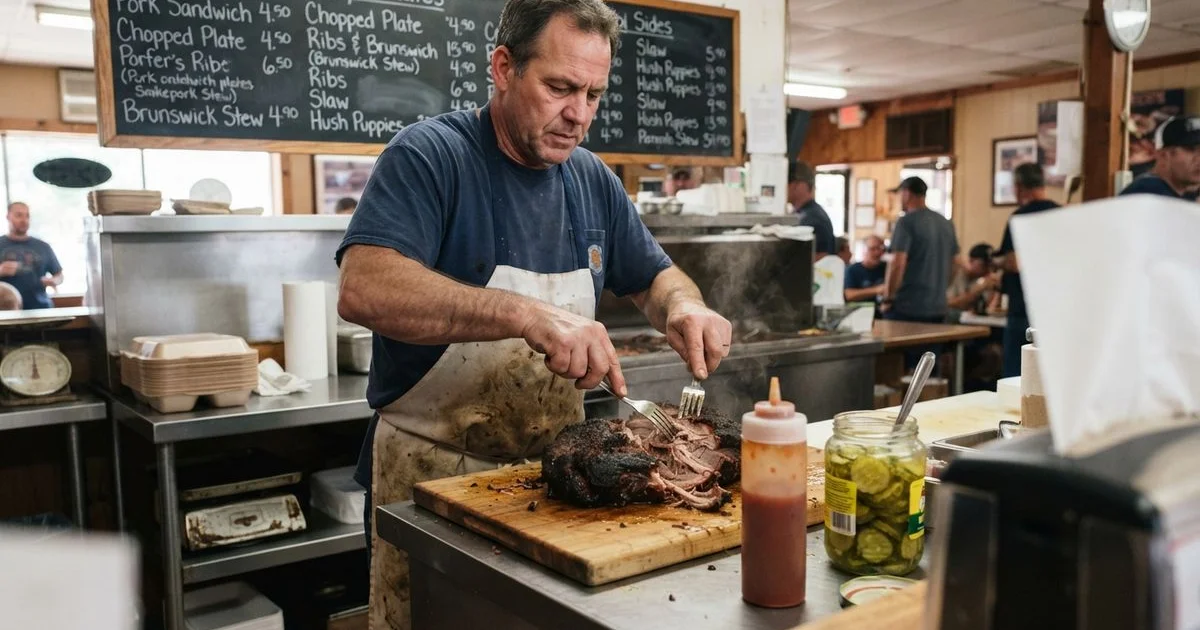
Pulled pork is one of the most ordered items at Central Florida BBQ restaurants, and Carolina-style BBQ is the tradition most of that pulled pork traces back to. If you are used to Texas brisket or Kansas City ribs, Carolina-style BBQ runs on a different set of rules, mostly built around the sauce and the cut.
The short version: it is about the pork and the sauce, not the smoke ring
Carolina-style BBQ is built on pork, most often shoulder, smoked for hours until it shreds apart easily by hand, then tossed or served with a thin sauce instead of a thick, sweet one. Two sauce families define the style, and Central Florida restaurants often serve one or both:
| Sauce style | Base | Flavor | Where it is most common |
|---|---|---|---|
| Vinegar-based | Vinegar and black pepper | Thin, sharp, peppery, cuts through fat | Eastern Carolina tradition |
| Mustard-based | Mustard and vinegar | Tangy, slightly sweet, golden color | South Carolina, sometimes called Carolina Gold |
Neither sauce is meant to coat the meat the way a thick tomato-based sauce does. Both are thin enough to soak into the pork rather than sit on top of it, which is part of why Carolina-style pulled pork can taste different bite to bite depending on how much sauce made it into that particular handful.
What good Carolina-style pulled pork looks and tastes like
The pork should be moist and loosely shredded, not compacted or stringy, with visible bits of bark, the dark, seasoned crust from the smoker, mixed in rather than trimmed away entirely. Bark adds texture and a smoky, slightly bitter contrast to the tangy sauce, so a plate with none of it usually means the outer crust was trimmed off before serving, which cuts flavor along with it.
Reviewers across Central Florida consistently call out tender, well-seasoned pulled pork and generous portions as the top reasons they return to a spot, and the same handful of complaints show up when it goes wrong: pork that is dry, sauce that is too heavy-handed, or a portion that feels light for the price. Asking for sauce on the side is a simple way to judge the meat on its own before deciding.
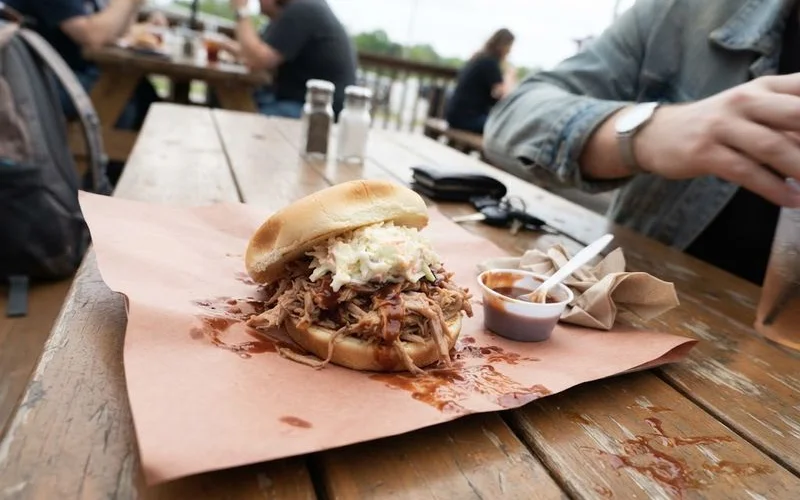
How to order it: sandwich, plate, or by the pound
Most Carolina-style spots offer pulled pork three ways: a sandwich (often topped with coleslaw for texture), a plate with two sides, or by the pound for taking home or feeding a group. The sandwich format is the most forgiving for a first visit since it is a lower commitment than a full plate, and coleslaw on top is traditional in the Carolinas rather than an odd add-on, worth trying even if it sounds unusual.
If you are ordering for a group, by-the-pound pricing is usually the better value than stacking individual sandwiches, and most restaurants will pack sauce separately on request so it does not steam the pork into mush before it gets to the table. Pulled pork by the pound also travels well, which is why it shows up so often at BBQ food trucks and tailgates around Central Florida.
Sides that actually fit the style
Coleslaw, hush puppies, and baked beans are the traditional pairings for a Carolina-style plate, and for good reason: coleslaw adds crunch and acidity that plays well against the vinegar sauce, and hush puppies give you something starchy and mild to offset the pepper. If a restaurant offers a Brunswick stew as a side or starter, it is worth trying, since it is a regional dish built from the same smoked-meat tradition and not something you will see outside a handful of styles.
Cornbread is common too, though it varies a lot by kitchen, some serve it sweet, some savory. If you are unsure which way a particular spot leans, ask before ordering a full side of it for the table.
When to go elsewhere
Carolina-style is not the right pick if you specifically want a thick, sweet, tomato-based sauce or a brisket-forward meal, since pulled pork and thin sauces are the center of the style, not sliced beef. If your group has mixed preferences, several Central Florida restaurants that lean Carolina-style also carry brisket or ribs with a house tomato-based sauce as an option, so it is worth checking the full menu rather than assuming a Carolina-style spot only serves one thing.
Looking for a spot near you? Listings are ranked using the review signals explained on our how we score page. Return to the homepage to compare it against the other BBQ styles covered in the region.
Common questions
- What makes Carolina-style BBQ different from Texas or Kansas City style?
- Carolina-style centers on pork, usually shoulder, smoked low and slow and then hand-shredded rather than sliced. The defining difference is the sauce: thin, vinegar-based or mustard-based sauces instead of the thick, sweet, tomato-based sauce common in Kansas City style or the sauce-light approach of Texas brisket.
- Is Carolina pulled pork always spicy?
- Not inherently. Vinegar-based sauce carries black pepper and a sharp tang rather than heat, though many restaurants offer a hot version alongside a milder one. Mustard-based sauce is tangy rather than spicy. If you are heat-sensitive, ask for the mild option or a sauce on the side so you can control it.
- What is the difference between vinegar sauce and mustard sauce?
- Vinegar-based sauce is thin, sharp, and peppery, common in Eastern Carolina style, and it cuts through the richness of fatty pork well. Mustard-based sauce, sometimes called Carolina Gold, is tangy and slightly sweet with a golden color, more common in South Carolina. Many restaurants offer both, so it is worth trying a small taste of each before committing a full plate to one.
- Should I order the sauce on the side or already mixed in?
- On the side, if you are trying a spot for the first time. Pulled pork with good bark and moisture should taste good on its own, and sauce on the side lets you judge that before deciding how much you actually want. If the kitchen automatically drowns the pork in sauce, it can be harder to tell what the meat itself tastes like.