
What to expect at a Korean BBQ restaurant: how it works
By Tom Chilton · Updated 2026-07-22
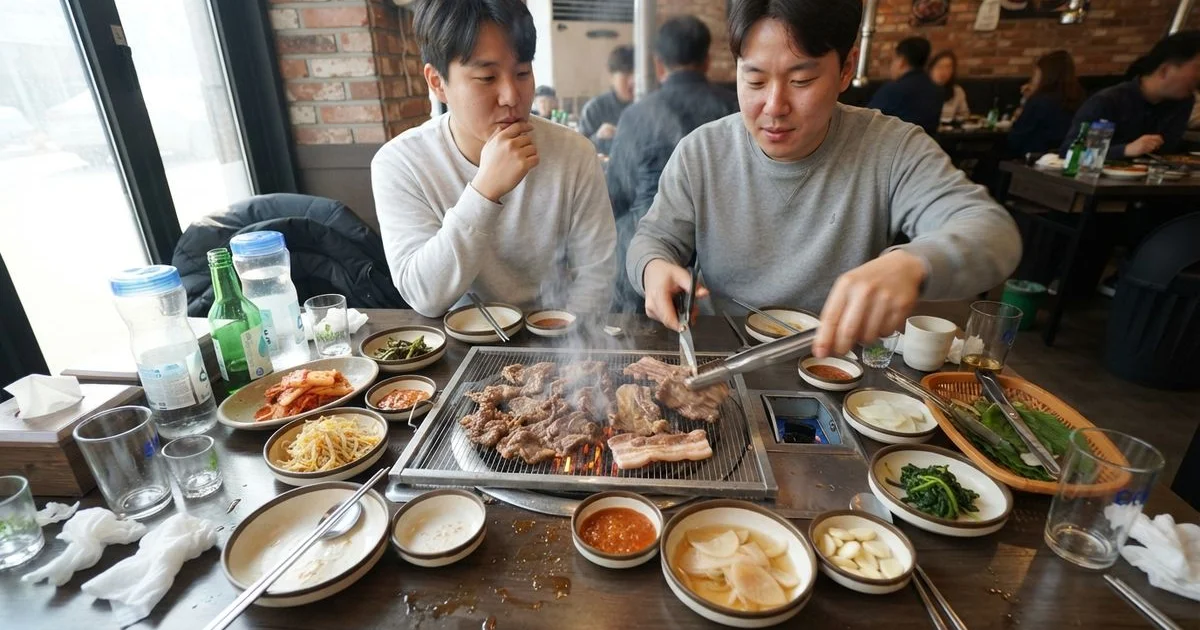
Korean BBQ is one of the most searched dining styles in Central Florida, and it works differently enough from Southern-style smokehouse BBQ that a first visit can feel confusing if nobody explains it up front. The short version: instead of meat that has already been smoked and plated for you, you are handed thin-sliced raw or marinated cuts and a hot grill built into the table, and you cook them yourself, a few pieces at a time.
The basic setup
Walk into most Korean BBQ restaurants and you will be seated at a table with a built-in grill, either gas or charcoal, with a vent hood above it. Soon after you sit down, a set of small side dishes called banchan arrives unordered, along with rice, lettuce leaves for wrapping, and dipping sauces. These are typically included in your meal and refillable.
Meat is ordered by cut, often in small platters meant to be grilled a portion at a time rather than all at once. Staff usually start the first round on the grill for you, show you roughly how long each cut needs, and swap out the grill plate or check on you as you go. You are not expected to be an expert. Asking “how do I know when this is ready” is completely normal and staff expect it from first-timers.
All-you-can-eat vs a la carte: know which one you are walking into
This is the single most important thing to confirm before you sit down, because it changes both the price and the pace of the meal.
| Format | How it works | Best for |
|---|---|---|
| All-you-can-eat | Flat price per person, unlimited reorders within a time limit (often 90 minutes to 2 hours) | Big appetites, groups who want to try many cuts without adding up a bill |
| A la carte | Order individual meat and side platters, pay for what you order | Smaller appetites, solo diners, anyone who wants to control the bill precisely |
All-you-can-eat spots often have rules worth knowing before you sit down: a per-person minimum for the whole table, a small leftover-food fee if you order and do not finish, or a time limit enforced with a table timer. None of this is unusual for the format, but it catches first-timers off guard if nobody mentions it at the door.
What to order on a first visit
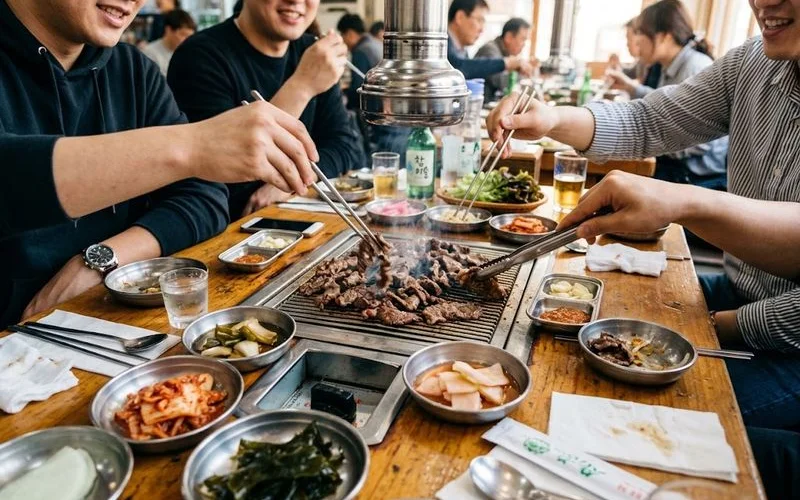
If you are new to the format, a mix of one marinated cut and one unmarinated cut is a good starting point, since it shows the range of what the grill can do. Marinated short rib (galbi) and thin-sliced marinated beef (bulgogi) are common entry points because the marinade does a lot of the flavor work and forgives slight overcooking. Pork belly (samgyeopsal), usually unmarinated, is another common favorite and is more forgiving to cook since the fat renders and self-bastes the meat.
Central Florida reviewers consistently point to two things as the marker of a strong Korean BBQ spot: authentic flavor in the marinades and banchan, and generous portions relative to the price, especially at the all-you-can-eat tier. Complaints tend to cluster around the opposite end, thin or inconsistent banchan variety and confusing pricing at checkout, so it is worth asking about the format and any per-person minimums before you order.
Basic table etiquette
A few habits make the meal smoother for you and your table:
- Use the tongs and scissors provided at the grill, not your personal chopsticks, to handle raw meat.
- Let staff know if a cut is cooking too fast, most grills have adjustable heat and they would rather fix it than have your food burn.
- Wrap-and-eat cuts, meat rolled in lettuce with rice and a dab of sauce, are meant to be eaten in one or two bites, so smaller portions per wrap work better than piling it high.
- If you are unsure whether something is fully cooked, ask. Staff would rather answer a “is this done” question than have a guest eat undercooked meat.
Deciding if it is right for your group
Korean BBQ rewards a group that wants to share, talk, and eat at a relaxed pace over an hour or two, rather than a quick sit-down meal. It is a strong pick for celebrations and gatherings where people want to try a variety of cuts without committing to one plate. Solo diners and very small parties can still enjoy it, though the all-you-can-eat format is generally built around groups splitting a shared grill, so ask about single-diner pricing if you are eating alone.
Ready to find a table? Listings are scored using real, recent review signals explained on our how we score page. Head back to the homepage to compare every BBQ style in the region.
Common questions
- Do I have to cook the meat myself at Korean BBQ?
- Usually, yes, at least partly. Most Korean BBQ restaurants build the meal around a grill set into your table, and part of the experience is cooking bite-size cuts yourself. Staff will typically start the first batch for you and step in to flip or trim as needed, so you are never fully on your own.
- Is Korean BBQ all you can eat, or do you order individual dishes?
- Both formats exist in Central Florida. Some restaurants run an all-you-can-eat model with a flat price per person and a time limit, usually 90 minutes to two hours. Others are a la carte, where you order meat and side dishes individually. Check the menu or ask when you sit down, since pricing and rules differ a lot between the two.
- What are banchan and do I have to pay extra for them?
- Banchan are the small side dishes, usually pickled vegetables, seasoned greens, and kimchi, that arrive at the start of the meal without being ordered. At most Korean BBQ restaurants they are included in the price and refillable on request, though it is worth confirming if a spot charges for refills.
- Is Korean BBQ a good fit for a large group?
- Often, yes, especially the all-you-can-eat format, since everyone eats at their own pace off a shared grill instead of waiting on individual plates. Call ahead for groups of six or more, since not every table has a grill built in and larger groups may need a reservation.